G-code
My experiments with 3D printing and generative design
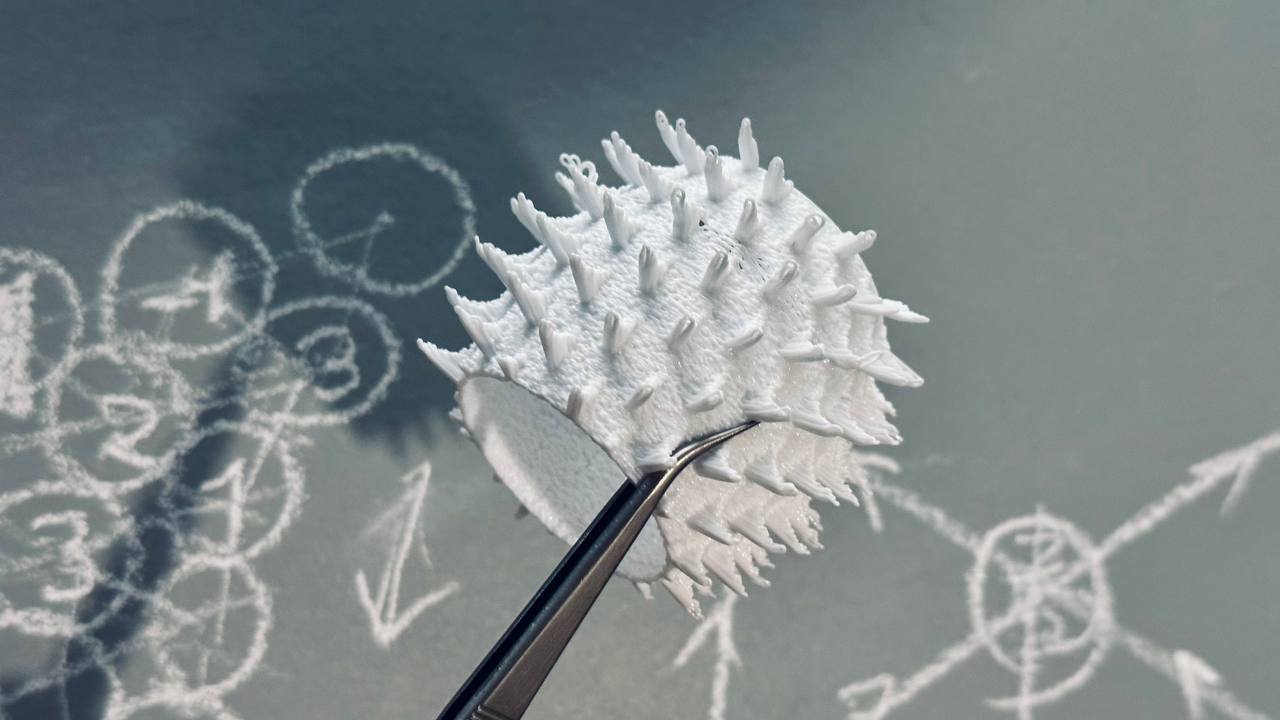
Geometric organics. I wanted to make something tactilely interesting, I think it worked out.
This is the third attempt: first had over-extrusion, second melted without a fan. Turns out I hadn't been using a fan before, and it worked fine. Midway through printing, the spool got stuck, but a miracle happened and it finished printing.
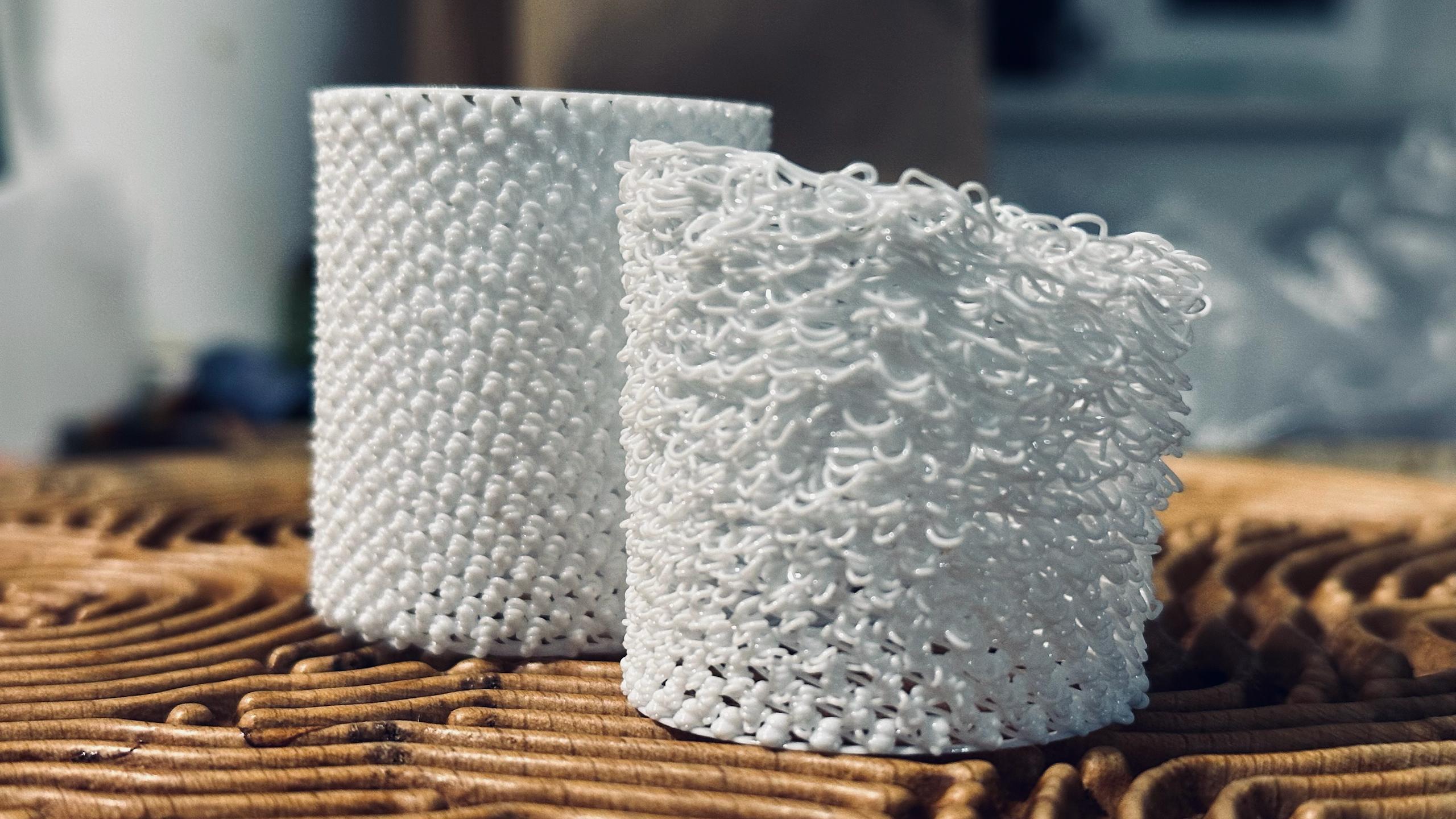
The transition to 3D turned out to be harder than I thought. First attempt was a disaster: the nozzle rose too fast and the wall couldn't keep up. But the second one stabilized — a sight to behold.
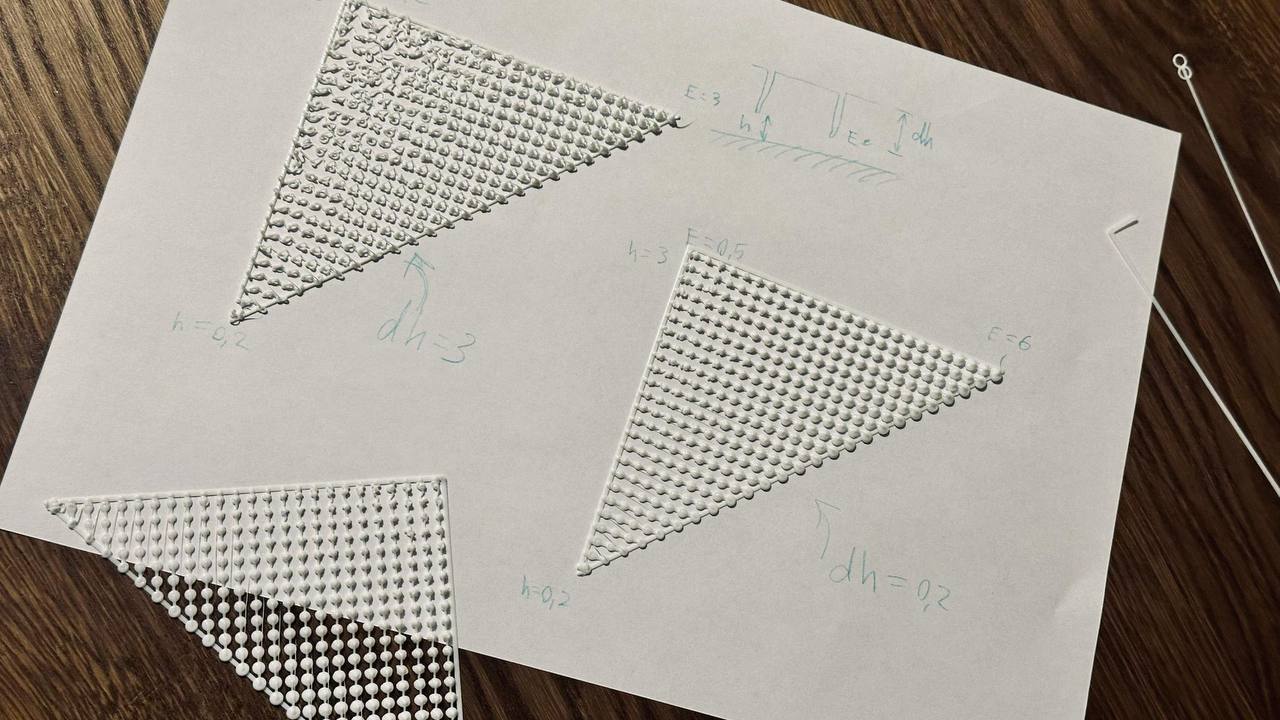
Decided to approach G-code generation systematically. Testing what happens with different heights and volumes of extruded plastic. Generated this trajectory with loops:
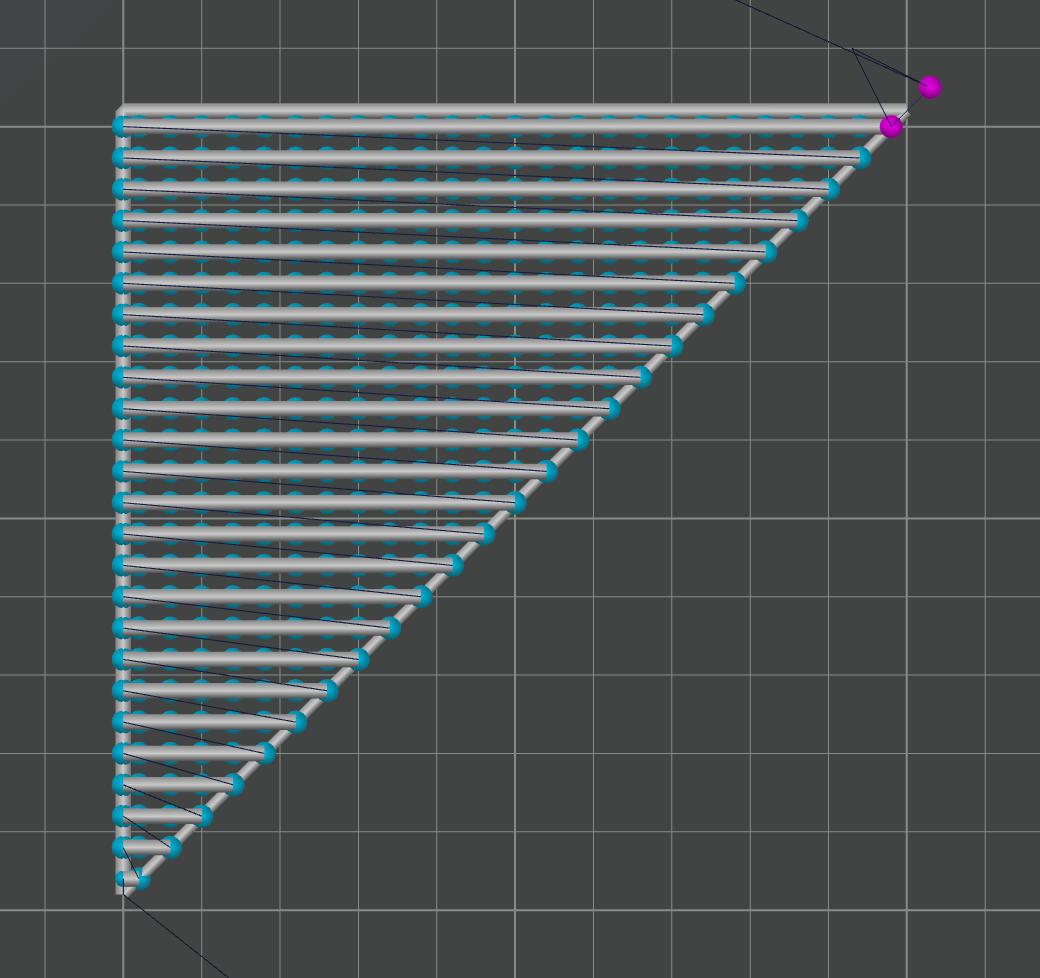
Got a matrix of bumps:
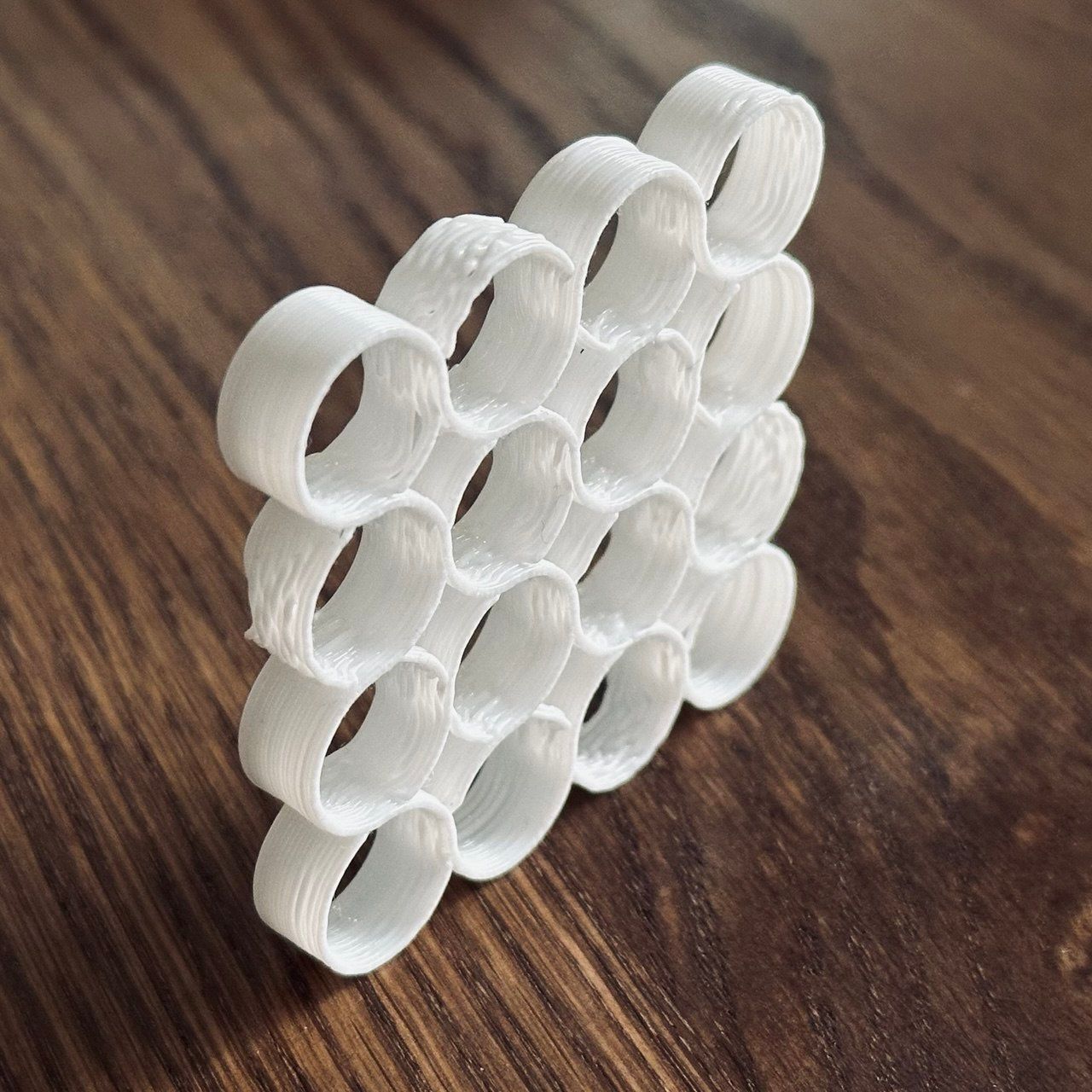
Another thing made with the same algorithm as yesterday's — a cellular automaton, but now packed into a hexagonal grid. Size is 4 cm.
The tubes fit tightly together, creating this honeycomb-not-honeycomb texture. I like how the print layers add organic feel — like some kind of coral.
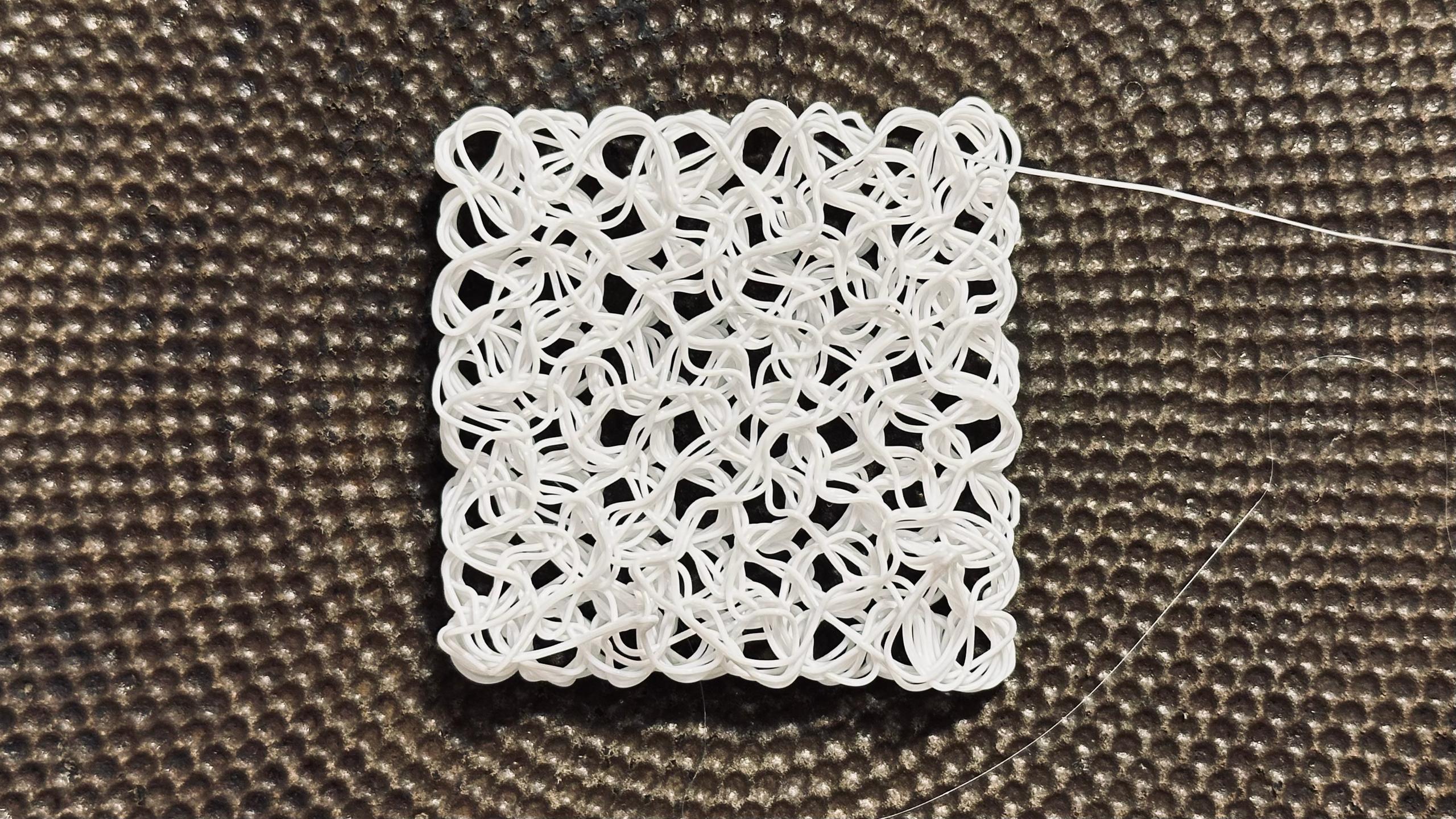
Put disproportionate effort into making this ramen noodle. First I ported yesterday's snake to G-code, then spent ages convincing the printer to extrude at least some plastic. Eventually it worked, I still don't understand why. Some non-obvious G-code magic. Or maybe I just haven't learned the ropes yet and the magic there is all obvious.
Learning to control a 3D printer through G-code. This is the language computers use to tell printers what to print — a long list of commands where to move and how much plastic to extrude.
Usually G-code is made by slicers: they take a 3D model, slice it into layers, and generate commands. But you can write G-code by hand! Then you can print not layer by layer, but up and down — creating lacy structures that a slicer couldn't handle.
Though if you mess up a digit, the printer will crash into the part at full speed and wreck everything with terrible sounds. Don't ask how I know this.
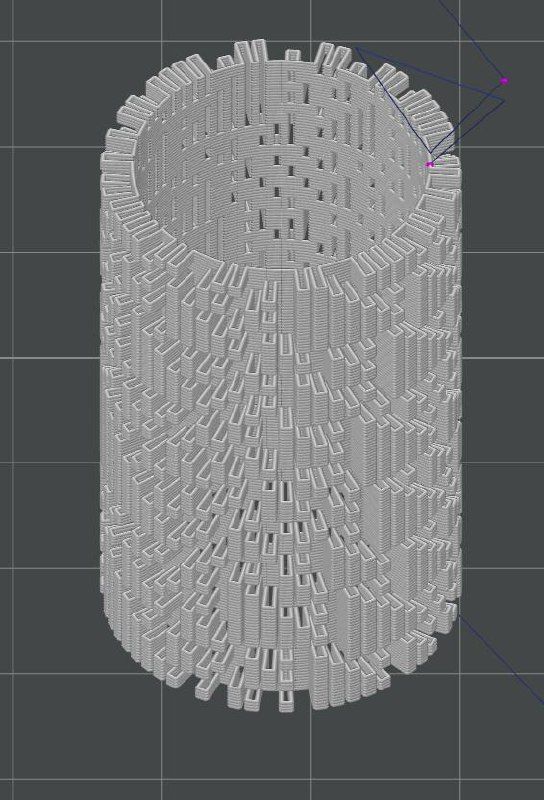
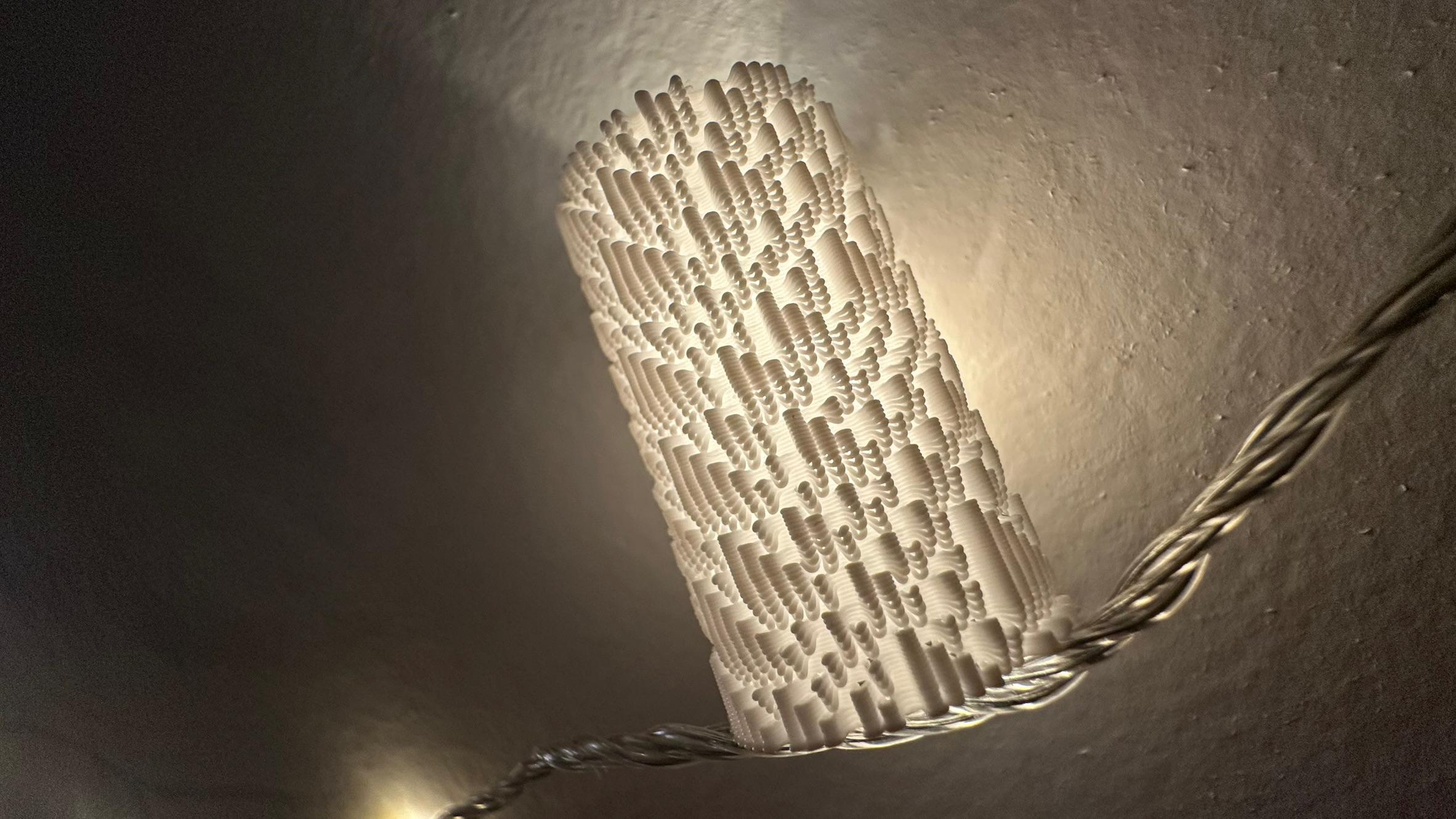
Tinkered for two days, got something cool. This is a one-dimensional cellular automaton — different steps are visible along the cylinder axis. I like the texture, like it's knitted.
In G-code viewer it looks like this
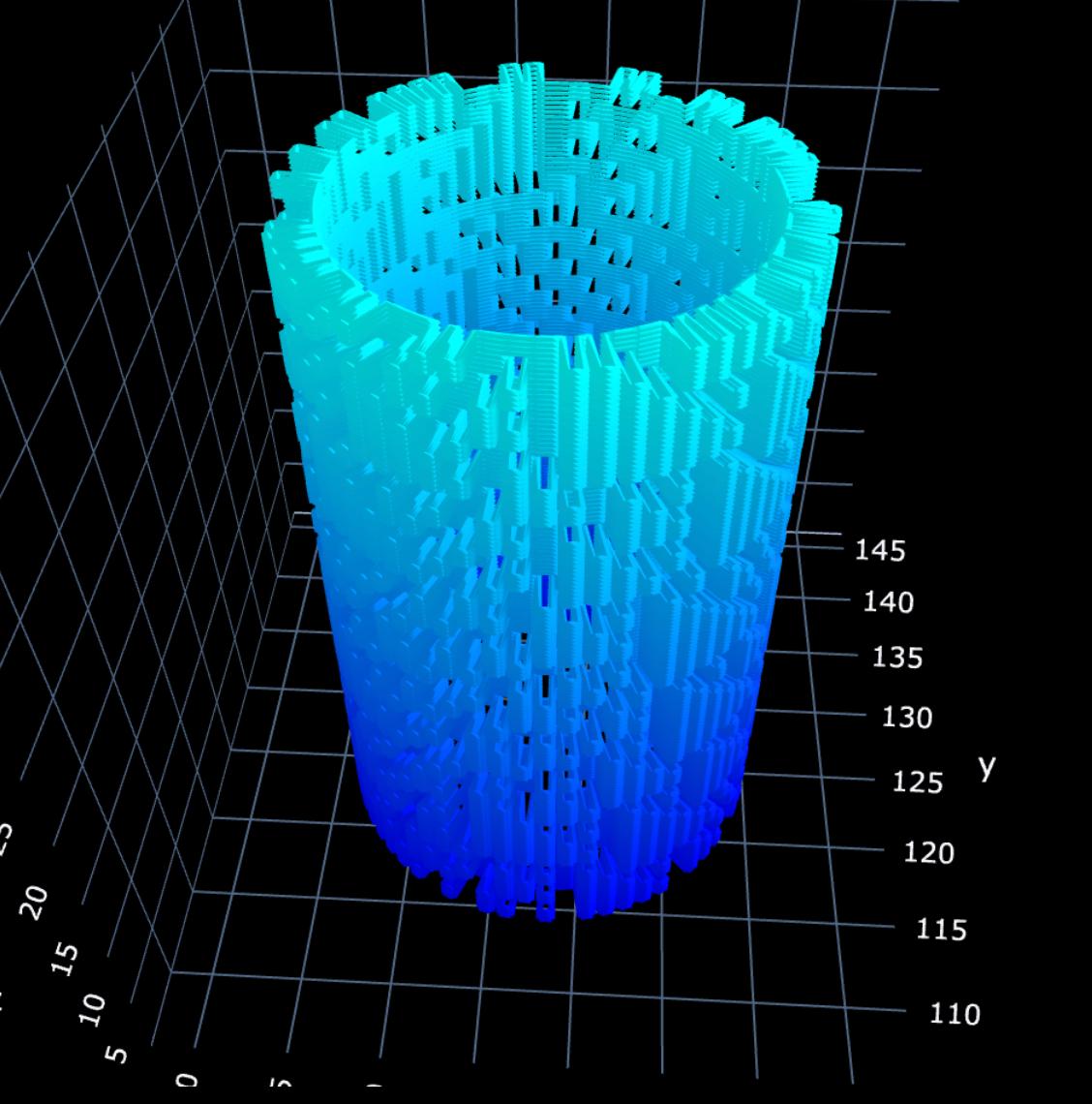
And in slicer like this