G-CODE → 2026-09-23
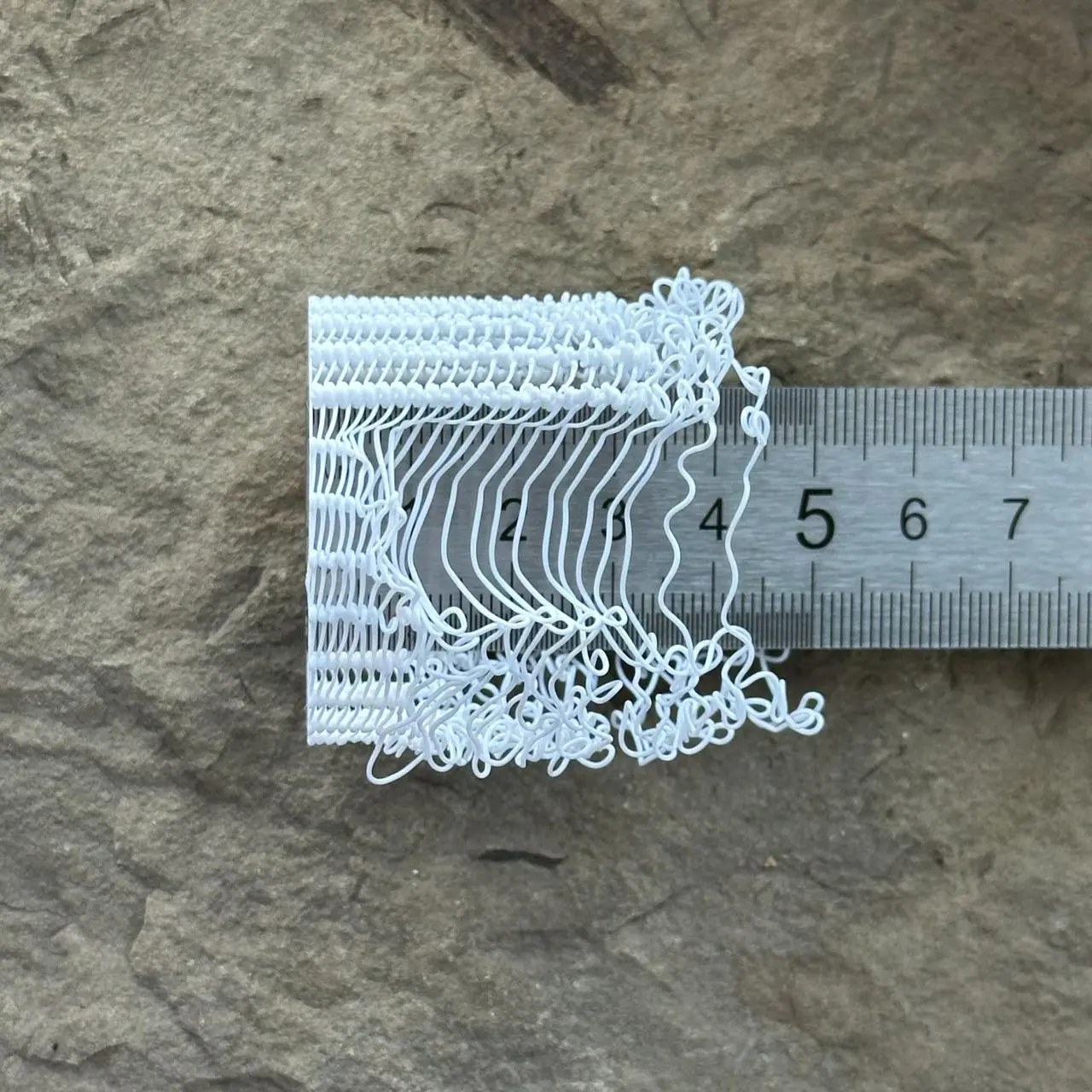
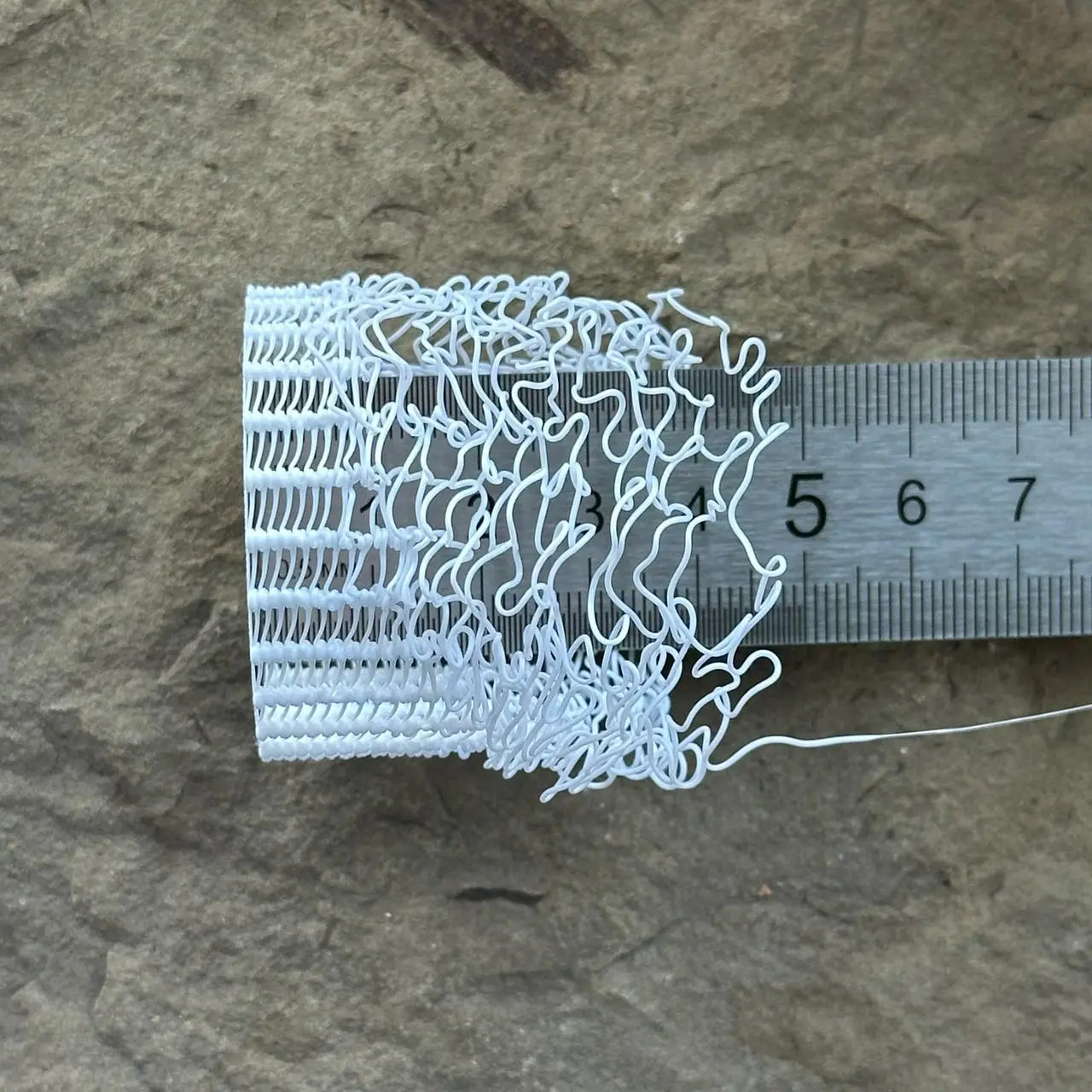
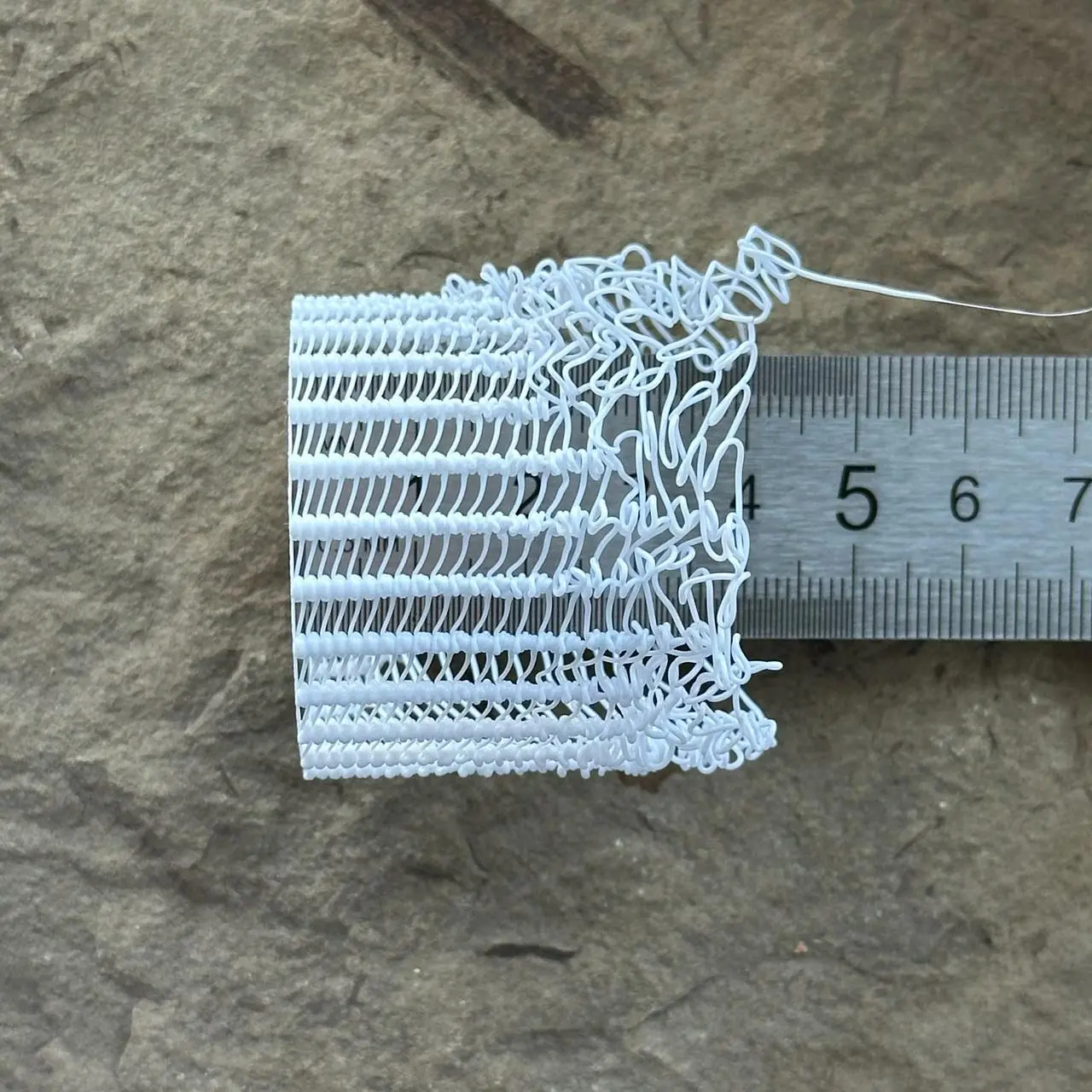
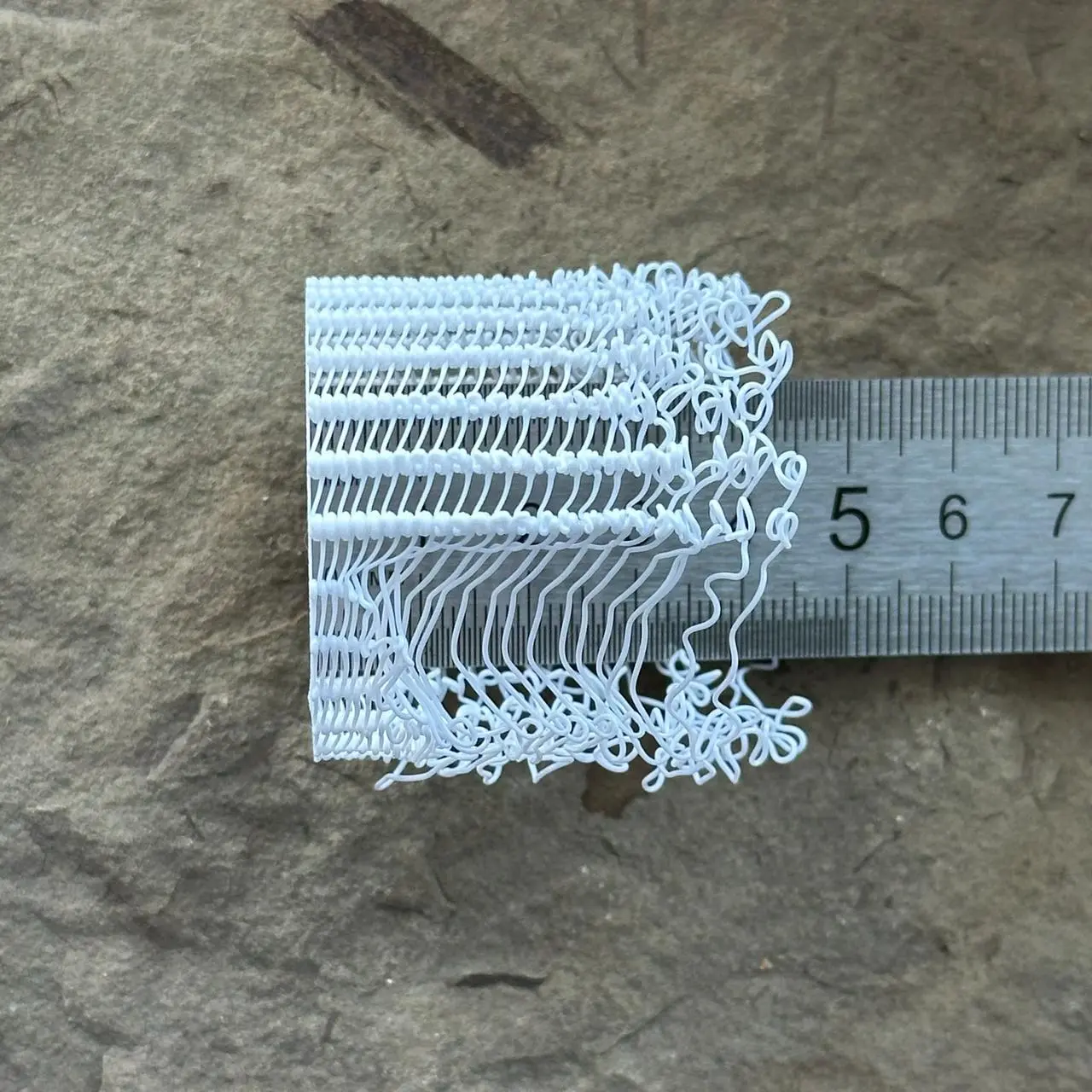
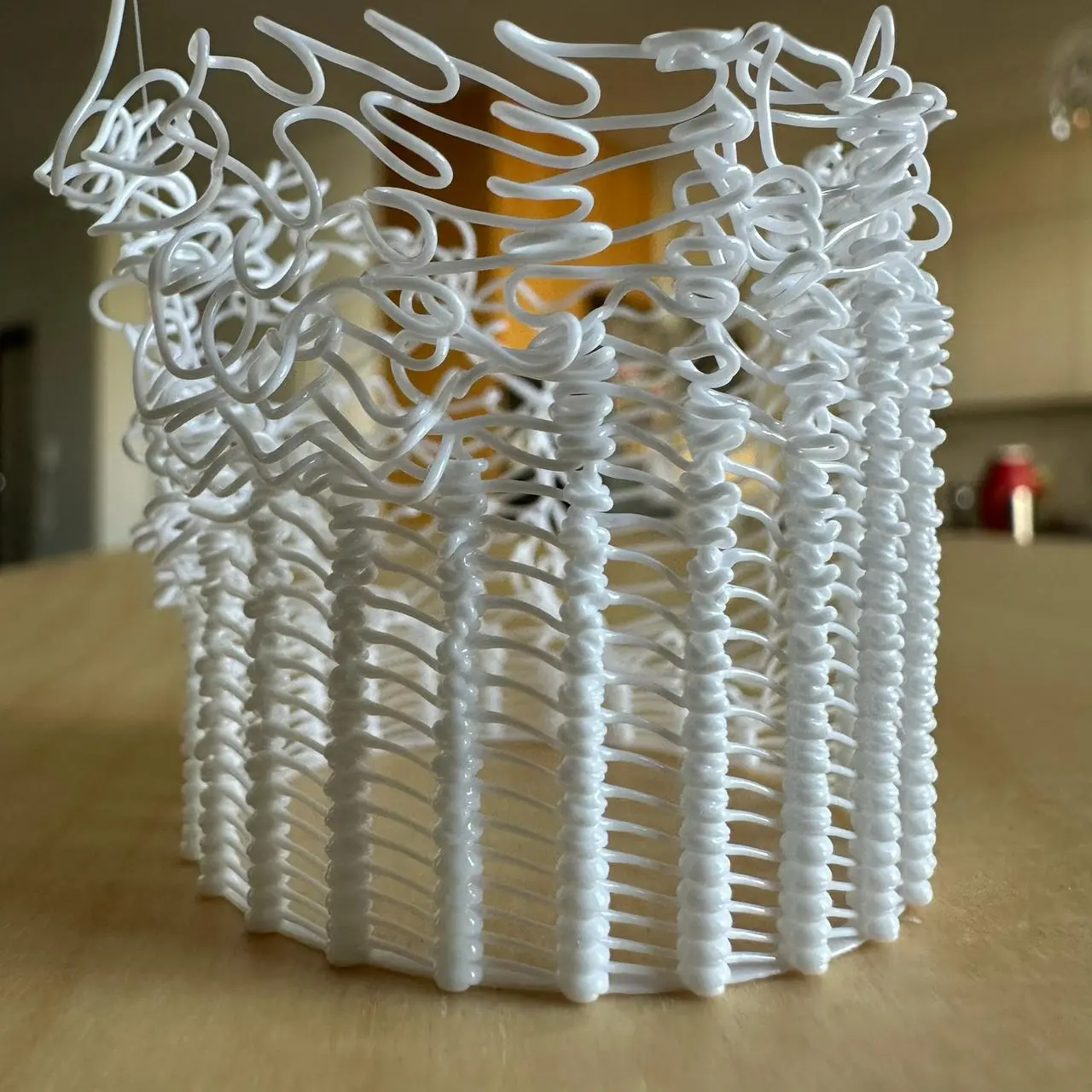
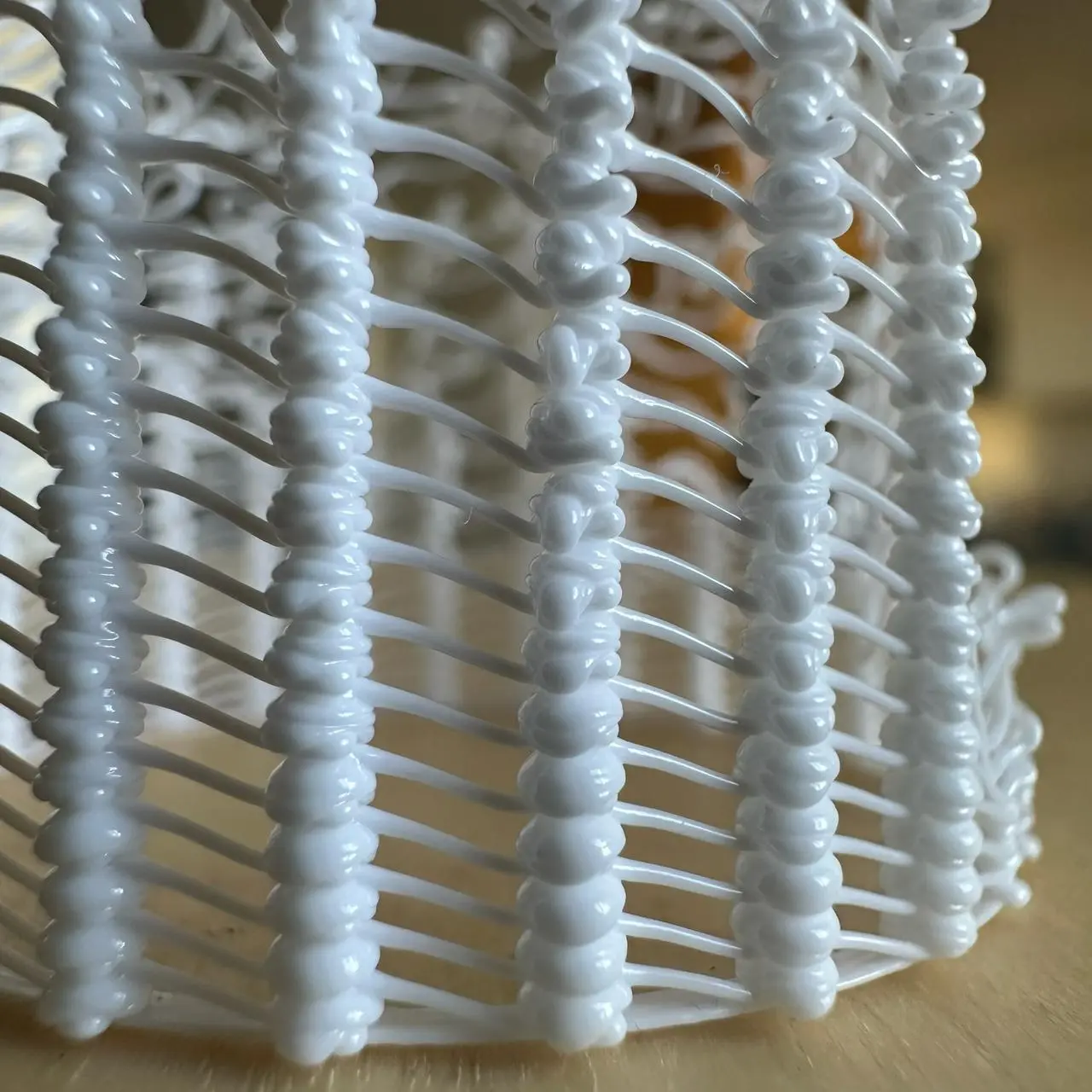
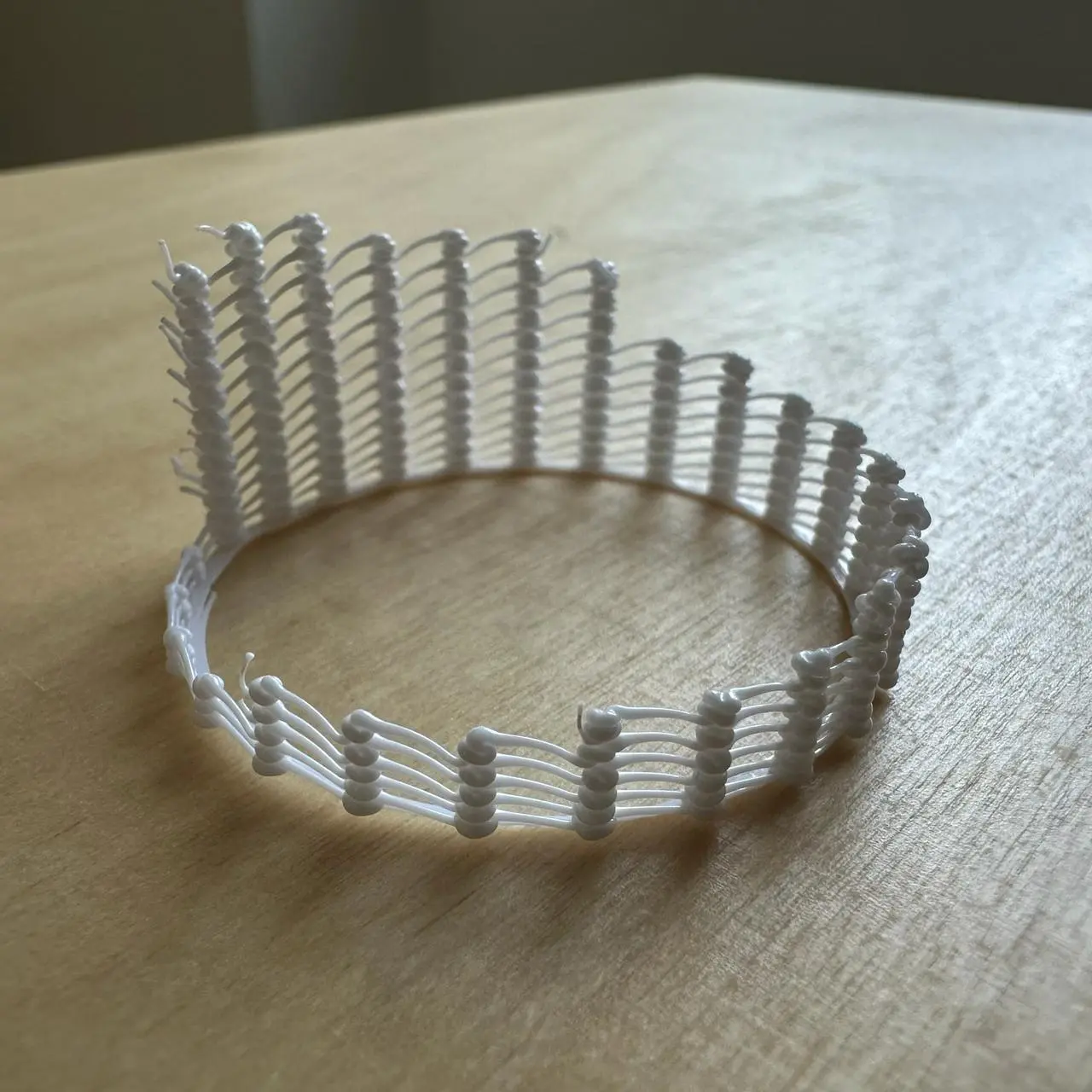
Droplet spiral.
An idea for the next iteration: touch the previous turn with the nozzle before extruding each droplet, so that the layers fuse more reliably.
Experiment data
Pitch is how far each turn sits above the previous one, i.e. the height from which a droplet is extruded onto the turn below.
| Droplet, mm³ | Knots begin at pitch, mm | Maximum pitch, mm |
|---|---|---|
| 1.00 | — (no knots) | 1.14 |
| 1.50 | 1.14 | 1.14 |
| 2.00 | 1.21 | 1.35 |
| 2.50 | 1.21 | 1.41 |
| 3.13 | 1.41 | 1.48 |
| 3.63 | 1.41 | 1.76 |
| 4.00 | 1.55 | 1.76 |
Print parameters
- Bambu Lab P1S, 0.4 mm nozzle, Textured PEI Plate
- Syntech PETG White, Ø1.75 mm
- Temperatures: 255 °C nozzle, 70 °C bed
- Part cooling fan: 100%
- Cylinder Ø40 mm, centered at X128 Y128
- Base: 3 spiral turns at Z 0.2 mm (radii 18.65…20 mm), 0.5 × 0.2 mm line, 20 mm/s
- First wall turn at Z 0.7 mm, or 0.5 mm above the base
- 25 droplets per revolution, 14.4° step, 5.03 mm arc distance between droplets
- Connecting strand: 0.35 × 0.2 mm, 15 mm/s
- Pitch remains constant within each revolution and increases stepwise on every new revolution: from 1.0 mm (turn 1) to 3.0 mm (turn 30),
h(n) = 1 + 2·(n−1)/29 - Droplet volume follows a sawtooth over every revolution, growing from 1 to 4 mm³:
V(i) = 1 + 3·i/24, i = 0…24 - Each droplet is extruded in place at 6 mm³/s: 1 mm³ in 0.17 s, 4 mm³ in 0.67 s
- 30 revolutions, total height 60.7 mm
- Print time: 9 min 44 s; filament: 904 mm
Observations
- The larger the droplet, the higher the wall remains intact and the later smooth droplets turn into knots.
- In every sector, the wall breaks within 0–5 revolutions after the knots begin to appear.